WhatsApp Chatbot: Guide to Building AI-Powered Bots in 2026
WhatsApp has 3.3 billion monthly active users. Over 400 million businesses use WhatsApp Business. And by 2026, AI-powered chatbots on the platform are projected to save businesses and consumers 7 billion hours annually.
If you are not using a WhatsApp chatbot yet, you are leaving money on the table.
This guide covers everything you need to know about WhatsApp chatbots in 2026 — from what they are and why they matter, to how Meta's new policy affects your bot, to a step-by-step walkthrough of building one without writing a single line of code.
Table of Contents
- What Is a WhatsApp Chatbot and How Does It Work?
- Why Your Business Needs a WhatsApp Chatbot in 2026
- Meta's 2026 Chatbot Policy: What Changed
- How to Build a WhatsApp Chatbot (No Code)
- Top Use Cases Across Industries
- Choosing the Right Platform in 2026
- Best Practices for 2026
- Frequently Asked Questions
- Conclusion
1. What Is a WhatsApp Chatbot and How Does It Work?
Unlike the standard WhatsApp Business app (which requires manual replies), a chatbot works 24/7 without breaks. It can manage thousands of simultaneous conversations, respond in multiple languages, and trigger actions like auto-tagging contacts, sending follow-up sequences, or updating your CRM.
How WhatsApp chatbots work under the hood
The technical architecture involves three layers:
- WhatsApp Business API — The official channel provided by Meta through ISV Partners (ISV partners) like ChatDaddy. This is the infrastructure that allows businesses to send and receive messages programmatically.
- Chatbot logic engine — This is where your bot's brain lives. It can be rule-based (keyword matching, decision trees), AI-powered (using large language models and NLP), or a hybrid of both. Modern platforms like ChatDaddy use drag-and-drop flow builders so you can design this logic without code.
- Integration layer — Your chatbot connects to external systems like CRMs, e-commerce platforms, payment gateways, and helpdesk software to pull data, trigger workflows, and keep everything synchronized.
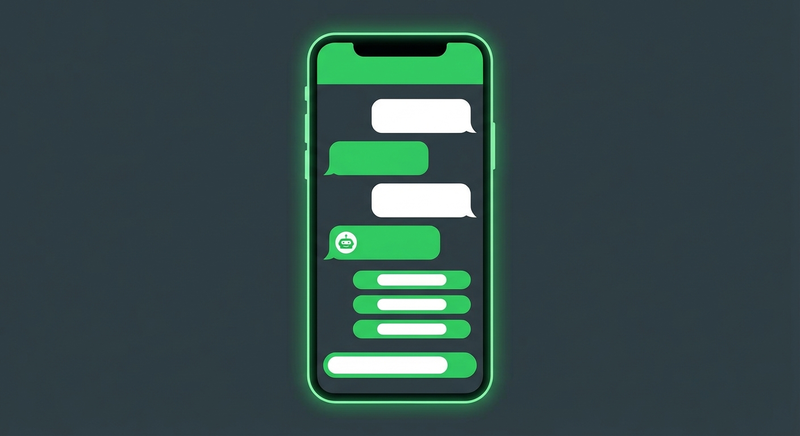
Rule-based vs. AI-powered chatbots
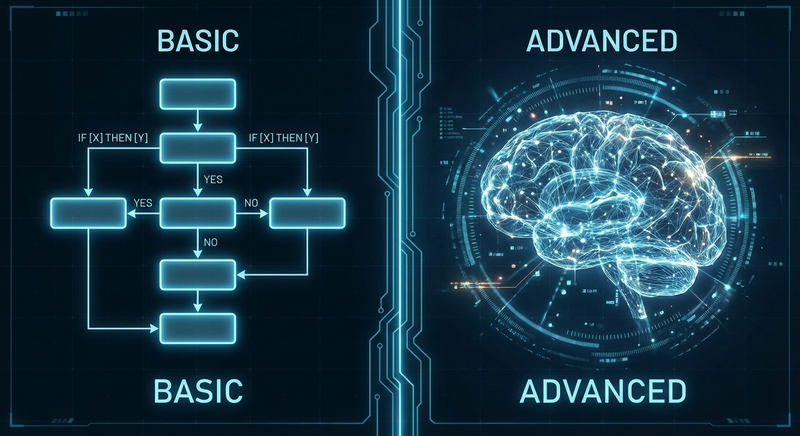
Rule-based chatbots follow predefined scripts. You set up keyword triggers and decision trees that guide conversations along fixed paths. They are predictable, easy to build, and work well for structured interactions like FAQs, order tracking, and appointment booking.
AI-powered chatbots use natural language understanding to interpret intent, even when the customer phrases things differently than expected. They can be trained on your business knowledge base using retrieval-augmented generation (RAG), enabling them to answer nuanced questions accurately. In 2026, these bots understand context, handle multi-turn conversations, and even process images and documents thanks to multimodal AI capabilities.
The best approach for most businesses is a hybrid: use AI for open-ended queries and rule-based flows for structured processes like checkout or booking.
2. Why Your Business Needs a WhatsApp Chatbot in 2026
The numbers tell the story
The WhatsApp chatbot market was valued at $1.34 billion in 2023 and is projected to reach $10.14 billion by 2030, growing at a 33.8% CAGR. Chatbot adoption on WhatsApp has increased by 92% since 2019, and 85% of large enterprises are expected to integrate the WhatsApp API into their tech stack by the end of 2026.
Key benefits of WhatsApp chatbots
- 24/7 availability — Your chatbot never sleeps. Companies with instant response times see 21X higher conversion rates compared to those responding after 30 minutes.
- Massive cost reduction — Automating repetitive queries reduces support team load. WhatsApp automation cuts customer support costs by approximately 30%.
- Lead generation and qualification — Chatbots engage visitors, ask qualifying questions, collect contact details, and segment leads automatically. Businesses report conversion rates of up to 28%.
- Multi-language support — AI-powered chatbots detect the user's language and respond in kind without requiring separate bot configurations.
- Auto-tagging and segmentation — Platforms like ChatDaddy automatically tag contacts based on behavior, interests, and conversation history. This powers smarter follow-ups and targeted broadcasts.
- Scalability — Whether you handle 100 or 100,000 conversations per day, a chatbot manages them all. ChatDaddy processes over 10 million daily messages across 23,500+ businesses.

3. Meta's 2026 Chatbot Policy: What Changed and What It Means for You
What Meta actually banned
Meta updated its WhatsApp Business API terms to prohibit AI model providers from distributing their AI assistants on the platform. This targets general-purpose bots like ChatGPT on WhatsApp, Perplexity's bot, and similar AI assistants that were using WhatsApp as a distribution channel for open-ended AI conversations.
What is still fully allowed
Business chatbots remain completely legal and supported. If your chatbot serves a defined business function — customer support, order tracking, appointment scheduling, lead qualification, product recommendations — you are not affected.
A travel agency running a chatbot for bookings, a retailer automating order status updates, or a SaaS company using a bot for onboarding support all remain compliant.
How to stay compliant
- Use an official ISV partner — Build your chatbot through a Meta-approved ISV Partner like ChatDaddy.
- Define your bot's purpose — Your chatbot should have a clear, business-specific function.
- Respect the 24-hour window — Service messages within 24 hours of a customer's last message are free. Outside this window, you need pre-approved message templates.
- Follow opt-in requirements — Customers must explicitly consent to receiving messages from your bot.
4. How to Build a WhatsApp Chatbot (No Code, Step by Step)
Step 1: Choose your chatbot platform
Select a platform that meets your needs. Key criteria:
| Feature | Why It Matters |
|---|---|
| Official ISV partner status | Ensures Meta compliance and reliable API access |
| No-code builder | Lets non-technical team members build and edit bots |
| AI capabilities | Handles open-ended queries beyond simple keyword matching |
| Auto-tagging | Segments contacts automatically for targeted follow-ups |
| Multi-language | Essential if your customers span different regions |
| CRM integration | Keeps customer data synced across your stack |
ChatDaddy checks all these boxes as a Meta Official ISV partner with a no-code builder, AI integration, auto-tagging, multi-language support, and a free starter plan.
Step 2: Connect your WhatsApp Business number
Once you sign up, connect your WhatsApp Business phone number through the platform. If you do not have WhatsApp Business API access yet, official ISV partners like ChatDaddy handle the provisioning process — typically completed within minutes.
Step 3: Design your chatbot flows
Using the drag-and-drop flow builder:
- Set up keyword triggers — Define words or phrases that activate specific responses. For example, "pricing" triggers your pricing breakdown, "hours" sends your business hours, and "human" routes to a live agent.
- Build decision trees — Create branching conversation paths. A lead qualification flow might ask: industry, company size, and use case, then tag the contact and route them accordingly.
- Add quick replies and buttons — WhatsApp supports interactive messages with buttons and list menus to guide users through structured flows.
- Configure auto-tagging rules — Automatically tag contacts based on their responses, behavior, or conversation outcomes.
Step 4: Train your AI (optional but recommended)
If your platform supports AI training, upload your knowledge base — FAQs, product documentation, policies, or any content your bot should reference. Platforms using RAG let your chatbot pull accurate answers from your actual business data rather than hallucinating generic responses.
Step 5: Test and deploy
Send test messages from a personal WhatsApp number. Verify that all keyword triggers fire correctly, decision trees branch as expected, auto-tags are applied accurately, fallback to human agents works, and multi-language responses display correctly. Once satisfied, activate the chatbot and monitor the first 48 hours closely.
5. Top WhatsApp Chatbot Use Cases Across Industries
E-commerce and retail
- Order status and tracking — Customers type their order number and instantly receive shipping updates and tracking links.
- Product recommendations — AI chatbots analyze purchase history to suggest relevant products, driving upsells.
- Cart abandonment recovery — Automated messages remind customers about items left in their cart, often with a time-limited discount.
- Return and refund processing — Guide customers through the return process without involving support agents.
Customer support
- FAQ automation — Handle the 60-80% of queries that are repetitive so agents focus on complex issues.
- Ticket creation and routing — Collect context and route conversations to the right agent via the shared inbox.
- Satisfaction surveys — Automatically send CSAT surveys after support interactions.
Lead generation and sales
- Qualification flows — Ask prospects qualifying questions, score them, tag them, and route hot leads to sales reps.
- Appointment scheduling — Integrate with calendar tools to let leads book demos directly within WhatsApp.
- Drip campaigns — Send a sequence of value-driven messages to nurture cold leads over time.
Healthcare
- Appointment reminders — Reduce no-shows with automated reminders and one-tap rescheduling.
- Symptom triage — Guide patients through preliminary assessments and route to appropriate care.
- Prescription refill requests — Let patients request refills through a simple chatbot flow.
Education
- Enrollment inquiries — Answer admission questions, share program details, and collect applications.
- Course updates — Send assignment deadlines, schedule changes, and exam reminders.
- Student support — Handle administrative queries about fees, documentation, and campus services.
Travel and hospitality
- Booking confirmations and modifications — Send itineraries, allow date changes, and handle cancellations.
- Concierge services — Provide local recommendations and restaurant bookings.
- Real-time updates — Notify guests about flight delays, gate changes, or check-in instructions.
6. Choosing the Right WhatsApp Chatbot Platform in 2026
Platform comparison at a glance
| Platform | Best For | Starting Price | ISV partner Status |
|---|---|---|---|
| ChatDaddy | All-in-one WhatsApp CRM + chatbot | Free (paid from $119/mo) | Official Meta ISV Partner |
| Wati | WhatsApp-focused marketing automation | $49/mo | Official Meta ISV Partner |
| ManyChat | Multi-channel marketing | $15/mo | Official |
| Respond.io | Omnichannel inbox management | $79/mo | Official |
| AiSensy | WhatsApp-first markets (India) | $14/mo | Official |
| Botpress | Developer-heavy custom builds | Free (paid from $89/mo) | Via partners |
Table 1: WhatsApp chatbot platform comparison — 2026
For a comprehensive comparison of CRM platforms with chatbot capabilities, see our best WhatsApp CRM guide.
Why ChatDaddy stands out
ChatDaddy is purpose-built for WhatsApp-first businesses. As a Meta Official ISV partner serving 23,500+ businesses and processing 10M+ daily messages, the platform combines:
- No-code chatbot builder — Drag-and-drop interface with keyword-based replies, decision trees, and auto-tagging.
- AI-powered responses — Train your bot on your business data for accurate, context-aware answers.
- Built-in CRM — Manage all contacts, conversations, and tags in one place.
- Multi-language support — Serve customers in their preferred language automatically.
- 24/7 auto-reply — Never miss a message, even outside business hours.
- Transparent pricing — Free plan available. Paid plans start at $119/mo (Basic, 5 teammates), $299/mo (Pro, 10 teammates, AI Chatbot included), and $799/mo (Max, 15 teammates, AI Chatbot included).
7. WhatsApp Chatbot Best Practices for 2026
1. Design conversations, not interrogations
Write your chatbot's messages like a helpful human. Use short sentences, conversational tone, and natural language. Break long responses into multiple messages to match how people actually text on WhatsApp.
2. Always provide a human escalation path
No chatbot handles everything perfectly. Make it easy for users to reach a human agent at any point. Include a persistent "Talk to a human" option and configure smart routing via your team inbox so agents receive full conversation context.
3. Use auto-tagging strategically
Tag contacts based on product interest, funnel stage, language preference, and support issue type. These tags power targeted broadcast campaigns, personalized follow-ups, and accurate reporting.
4. Optimize for the 24-hour service window
WhatsApp's per-message pricing model means service messages within 24 hours of a customer's last message are free. Design your chatbot to maximize engagement within this window — resolve queries quickly and prompt next actions while the window is open.
5. Monitor, measure, and iterate
Track key metrics: response time, resolution rate, handoff rate, conversion rate, and customer satisfaction. Review conversation logs weekly. Identify common failure points, add new keyword triggers, and refine AI training data. The best chatbots are never "done" — they improve continuously.
6. Stay compliant with Meta's policies
Obtain explicit opt-in before messaging customers, use approved message templates for outbound communication, never send spam, and work with an official ISV partner to ensure compliance. Keep your chatbot's purpose clearly defined and business-specific.
Ready to Build Your WhatsApp Chatbot?
ChatDaddy's no-code chatbot builder lets you create AI-powered bots in minutes — with auto-tagging, keyword replies, and 24/7 automation. Trusted by 23,500+ businesses.
Start Free TodayRelated Articles
- No-Code WhatsApp Chatbot Builder
- AI Chatbot for WhatsApp
- WhatsApp Business Automation Tool
- WhatsApp Customer Support Guide
- WhatsApp CRM: Complete Guide
8. Frequently Asked Questions
What is a WhatsApp chatbot?
A WhatsApp chatbot is an automated program that communicates with customers through WhatsApp using AI, rules, or natural language processing. It handles tasks like answering FAQs, qualifying leads, processing orders, and providing 24/7 support without human intervention. Businesses build and deploy them through the WhatsApp Business API using platforms like ChatDaddy.
Is it free to create a WhatsApp chatbot?
Yes, several platforms offer free tiers for building WhatsApp chatbots. ChatDaddy provides a free plan with basic chatbot features including keyword-based replies and auto-tagging. However, you still need WhatsApp Business API access, and Meta charges per-message fees that vary by message type and recipient country — ranging from fractions of a cent to $0.20+.
Are WhatsApp chatbots banned in 2026?
No, business chatbots are not banned. Meta's January 2026 policy only prohibits general-purpose AI assistants like ChatGPT and Perplexity from distributing on WhatsApp. Business chatbots used for customer support, order tracking, lead generation, and other defined business functions remain fully compliant and unaffected by the policy change.
How much does a WhatsApp chatbot cost?
WhatsApp chatbot costs include two components: platform fees and Meta's per-message API charges. Platform pricing ranges from free to $800+ per month depending on features and volume. ChatDaddy starts free with paid plans from $119/mo. Meta's per-message charges vary by country and category — for example, marketing messages cost $0.0625 in Brazil and $0.0107 in India.
Can a WhatsApp chatbot send messages in multiple languages?
Yes, modern WhatsApp chatbots support multi-language messaging. AI-powered platforms like ChatDaddy detect the user's language automatically and respond accordingly. This is essential for businesses serving multilingual markets across Southeast Asia, the Middle East, Latin America, and Europe where WhatsApp is the primary communication channel.
9. Start Building Your WhatsApp Chatbot Today
The data is clear: businesses using WhatsApp chatbots generate more leads, resolve support tickets faster, and operate at a fraction of the cost of traditional customer service channels. With Meta's 2026 policy firmly supporting business chatbots and the no-code builder market making deployment accessible to everyone, there has never been a better time to get started.
Whether you need an AI-powered support bot, a lead qualification machine, or a full automation engine that handles everything from cart recovery to appointment booking — ChatDaddy's no-code chatbot builder lets you create it in minutes.
Start free at ChatDaddy and build your WhatsApp chatbot today.
